
What Radon and Polygraph Tests Have in Common
If your furnace goes out in January in Minnesota . . . it’s a pretty high priority repair.
Ditto for a central a/c compressor that decides to konk out in July.
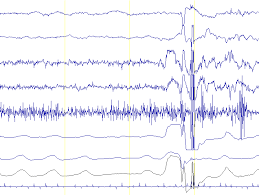 Fortunately, there’s a perfectly good, temporary solution for basements that are discovered — sometimes in the course of a home sale — to have elevated radon levels (more than 4.0 picoliters per million parts).
Give up?
Crack a few basement windows (assuming they open).
Leaving (Digital) Footprints
That lowers radon levels by introducing a flow of fresh air — which, incidentally, is how radon  remediation works as well (albeit through PVC tubes, vents, and occasionally, an air pump/exchanger).
Not incidentally, opening doors or windows is also a patented way to defeat a radon test.
Unfortunately for home sellers tempted by such a strategy, the digital, hourly readout most commonly used registers a sharp drop when that happens — busting the owner (and effectively voiding the test).
See also, “Twin Cities Contractors: in Demand.“
