
“Now You See It . . . Now You Don’t”
Once a “For Sale” home is under contract, the usual convention is to switch its MLS status from “Active” to “A,i” for “Sold, subject to inspection.”*
 That lets all other prospective Buyers know that there’s somebody ahead of them.
So, what happens if the Buyer’s inspection goes badly and the home comes back on the market?
The “i” goes away.
Compare With “TNAS”
Unlike changes to other MLS statuses such as “Pending” or “TNAS,” however, there’s no record of the previous “A,i” status.
Which means that subsequent Buyers (and their agents) won’t know — at least from perusing the listing’s MLS history — that there was a previous deal.
Does it matter?
Sometimes.
The $64,000 Question: Why Did the Buyer Walk?
If the Buyer walked because their inspection uncovered a material issue that they couldn’t resolve with the Seller, future Buyers absolutely would want to know.
When that’s the case, though, under Minnesota law Sellers are required to update their disclosure to reflect the issue(s).
Even when a Seller fraudulently fails to do that, the odds are that if Buyer #1’s inspector uncovered the issue, so will Buyer #2’s inspector (Sellers, take note).
(Other) Reasons Deals Unravel Post-Inspection
Of course, not every deal that comes undone following the Inspection implicates the condition of the home.
I can think of three such scenarios.
One. “Buyer’s remorse.” This most commonly afflicts first-time Buyers, or Buyers who impetuously bought without first learning the market.
There’s nothing really wrong with the home — the Buyer just wants out — and effectively uses the Inspection Addendum to do that.
One tack is to invoke the cancellation clause at the end of the standard Minnesota Inspection Addendum.
The other is by . . .
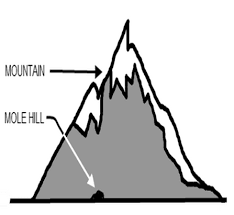
Two. Making an inspection “molehill” into a mountain, i.e., unreasonable Buyer demand(s).
If the Buyer insists on a $5,000 price reduction because an older-but-functioning water heater heater has some rust on it . . . most Sellers will understandably balk.
Alternatively, an overzealous and/or overly cautious home inspector may flag phantom issues that undermine the Buyer’s confidence in the home (especially if it’s older).
Too, following the inspection, unschooled Buyers have been known to present Sellers with a home repair list rather than a list of material defects — another inspection “no-no,” especially in a seller’s market.
Three. Bad Faith Buyers.
Occasionally, unethical Buyers — or ones who chased a home in multiple offers — will view the Inspection phase of the deal as a chance to renegotiate the price.
Unless the Buyer’s original offer was so superlative that the Seller is willing to adjust the price to preserve the deal, that usually doesn’t fly.
Stigma? Not Necessarily
For all those reasons, simply knowing that a previous deal went south doesn’t necessarily tell subsequent Buyers anything about the condition of the home.
Instead, Buyers should scrutinize the Seller’s (updated?) disclosure, then independently determine the home’s condition by hiring the best inspector they can find — no matter how long the home’s been on the market, or who’s previously tried to buy it.
Call it the “trust but verify” approach.
*If the Buyer’s Inspection Addendum stipulates that there are to be no showings while they do their inspection, the Seller must switch the home’s status to “TNAS,” for “Temporarily Not Available for Showing.”
