

Comparing Housing — and Auto — “Apples & Oranges”
Heard the one about the physicist, the chemist, and the economist stranded on a desert island?
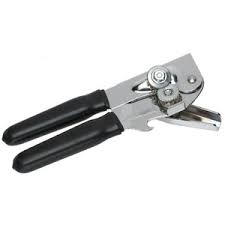
A can of soup washes ashore — but the three (hungry) professionals have no way to open it.
The physicist says “We could drop it from the top of that tree over there until it breaks open.” And the chemist says “We could build a fire and sit the can in the flames until it bursts open.”
Those two squabble a bit, until the economist says “No, no, no. Come on, guys, you’d lose most of the soup. Let’s just assume a can opener.”
Just as there is a perennial “Rent vs. Buy” debate in the housing market, there’s an analogous “lease vs. buy” analysis when it comes to new cars.
 Both are equally inane, in my opinion.
That’s because both debates invariably incorporate a fatal assumption: that the same car or home is being rented or purchased.
That’s precisely the premise baked into The New York Times’ current article on the subject, “Auto Leases Entice, But They’re Still Costly.”
Assumption: 2014 Honda Accord for 6 Years
So, the writer assumes that the car consumer in question wants to drive a new Honda Accord for the average holding period, six years, and examines the cheapest way to do that.
Unh-unh!
Stop there!
I suppose, as a Realtor, I could drive my clients around in a six-year old Honda Accord.
But, I don’t want to.
It’s not consistent with my brand (yup, Realtors are one-person brands) — and frankly, it’s not as fun or comfortable.
 And because it’s a legitimate business deduction, my after-tax cost to drive a newer, more upscale model is lower than a “civilian’s.”
As a result, every 30 to 36 months, I turn in a low mileage, late-model car; pay a relatively modest upfront fee; and, Voila!, drive off with a brand new one.
As in, “not-the-same-car for years #4, 5, and 6.”
I dare say that logic — and math — informs most business lessees’ decision to lease.
Realtor Job Perk; Housing Rent vs. Buy Decision
Housing analysts make the same, fatal mistake when they assume that the exact same property can either be rented or owned.
Once in awhile, yes; the majority of the time, no.
Bona fide home sellers usually don’t want to be (absentee) landlords.
 Nor do most home sellers want to be financial partners with the people occupying their homes (in the case of contracts for deed).
The result?
At least in the Midwest, nice(r) homes in nice(r) neighborhoods can be bought — but they can’t be rented.
End of comparison, because you’re not comparing the same things (I’d say, “apples and oranges”* — but that would be cliché).
P.S.: Another virtue of perpetually driving new(er) cars?
They’re always under warranty (= no repair costs).
On the flip side, the insurance is higher.
*Leave it to economists to have a fancy term for “apples-to-apples” comparisons: “ceteris paribus,” which is Latin for “everything else held equal.”
Inconveniently, that’s the case exactly 0% of the time.
