
The Cost(s) of Corporate “Free Speech”
In this era of increasingly unfettered corporate power, it’s worth remembering that — at least once upon a time — corporate charters were issued by the sovereign (king, actually), to a relative handful of entities, and conferred extremely narrow rights and powers.
 Like, the right to conduct a specific line of business, in a defined geographic area (or territory, in the case of the New World).
We — or more accurately, corporations — have certainly come along way since then.
Cue, “Citizens United”
Now, individual Secretaries of State blithely issue corporate charters conveying potentially vast power . . . for a nominal filing fee (want to guess why Delaware is the default choice for major corporations? It’s the undisputed winner of a rather sordid “race to the bottom” to gut any and all restraints on corporate power).
The most significant accretion of said corporate power?
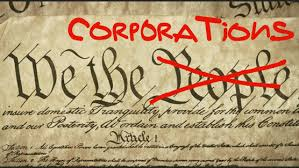
The Supreme Court’s 2010 holding in “Citizens United vs. Federal Election Commission” granting corporations legal “personhood.”
That hugely significant step opens the door to corporations, as legal “people,” enjoying and exercising the right to free speech.
Not-So-Free Speech
Of course, the channels through which corporate “speech” operate are lobbying and campaign contributions:
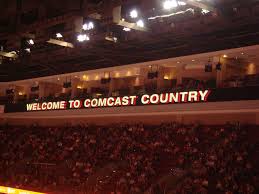
In 2013, Comcast spent $18.8 million on federal lobbying, according to the Center for Responsive Politics. That’s more than all but six other corporations. The company is also a major donor, making nearly $5.5 million in federal political contributions during the 2012 cycle.
Recipients of Comcast’s largess include President Obama and Pennsylvania’s congressional delegation in Washington, a veritable Comcast caucus.
–“Welcome to Comcast Country”; The New York Times (4/24/2013).
The NYT piece goes on to chronicle the various ways Comcast, by being a savvy political player, gets away with being a rather crummy (and expensive) service provider.
Co-Opted Rigged(?) Branches of Gov’t.
Exactly why all this should be is frankly a puzzle to me, both practically and legally.
In a perfect world, the Executive, the Congress, or both(!) would act to limit corporations’ power, and the Supreme Court would validate the laws they passed.
In today’s (very) imperfect world, all evidence points to it being too late for that, given how much corporate cash now bankrolls so many politicians in so many ways (campaign contributions, lobbying dollars, lobbying jobs for former politicians and regulators, untold billions paid annually to Wall Street law firms stuffed with, yup . . . former politicians and regulators, etc.).
Sort of like Michael Lewis’ “Flash Boys,” the dirty not-so-little secret is, “they’re all in on it, in varying degrees.”
Or, at the very least, the various players have all figured out how to symbiotically co-exist with things just the way they are.
One – Two Punch
The solution?
Bypassing traditional, “captured” political channels, and instead passing constitutional amendments — both state and federal — to do what the people’s elected representatives and judges plainly will not.
Amendment #1? (actually, #28)
How about something like this:
“Resolved, Corporations are not legal people. Only living, breathing people may participate in the political process.”
That should quickly be followed by Constitutional Amendment #29, requiring Secretaries of State to issue corporate charters that forbade corporations from hiring lobbyists or making campaign contributions — and revoking that right from existing corporations.
“Of the people, by the people, for the people,” indeed.
P.S.: No less than retired Supreme Court Justice John Paul Stevens has endorsed just such an approach.
See also, “Corporations Are Not People“; “Drug Dealers vs. Bankers: Top Ten Differences“; and “A Financial Gettysburg Address: Redeeming the Crash.“
