
Discounting(?) for a Conservation Easement
NimbÄ“ noun: “a person who objects to the siting of something perceived as unpleasant or potentially dangerous in their own neighborhood, such as a landfill or hazardous waste facility, especially while raising no such objections to similar developments elsewhere.”
–definition, “Not in My Backyard.”
In contrast to the traditional definition of NIMBY, there’s the opposite kind: when the local municipality or county won’t let you put something in your backyard that you want to put in.
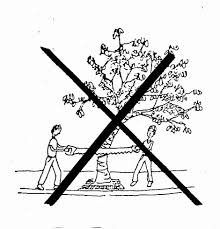 Like a pool. Or a tennis court. Or even a clearing in place of a thicket of trees.
That’s the practical consequence of a conservation easement, which essentially requires that the owner maintain the status quo.
Intended Use(s)
Does that matter?
Not if everyone’s happy with the status quo.
However, when a home is for sale, if a prospective Buyer wants to, say, remove a stand of trees to put in a pool, and a big chunk of the backyard is subject to a conservation easement . . . it can easily be a deal breaker.
Which is why it’s smart for Sellers to disclose any known easements, early on, and save everybody time.
