
Unpaid Property Taxes: When Credits are Bad and Debits are Good
Normally, credits (getting money) at closing is good, while paying money (debits) at closing is bad.
When is that not the case?
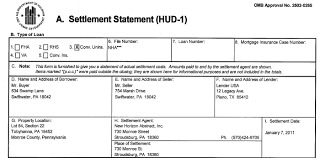 When the Buyer is getting a credit at closing from the Seller for the Seller’s pro rata share of the property taxes . . . but the Buyer is getting stuck with the (unpaid) bill.
A Closing Accounting Primer
Home sales that close in Minnesota this time of year typically would pay the 2nd half property tax payment out of the sales proceeds (Note: in Minnesota, residential property taxes are paid in two installments: May 15 and October 15).
Step #2: charging (debiting) the Buyer for their share of the bill.
So, for a home that closed Oct. 31, the Seller would be responsible for two-thirds (July-Aug-Sept-Oct), and the Buyer responsible for one-third (Nov.-Dec.).
HUD-1 Math
If the Seller effectively paid the entire bill at closing (handled as a deduction from their sales proceeds), they would be  entitled to a credit back for one-third.
The reciprocal of that would be a debit on the Buyer’s side of the HUD-1 (federal closing worksheet) for the same amount.
Which is why seeing a credit there (on a recent deal in Woodbury, where I represented the Buyer) was a yellow flag.
The solution: clearly shift responsibility for the property tax bill to the Seller; delete the Buyer credit on the HUD-1; and replace it with a Buyer debit.
Done, done, and done . . .
See also, “May Closings & (Minnesota) Property Taxes.”
