1) Bigger Garage; 2) Attached (vs. Detached);
3) No More Shared Shoveling
If you’re a developer who just bought a dated, undersized tear-down on a small(er) city lot, what do you do?
To maximize profit, you want to build as big as possible, consistent with city zoning and setback requirements.
However, if you overdo it, and the new home devours the lot, you risk turning off potential family Buyers who prize a backyard.
While balancing those considerations, you also need to be mindful of upper bracket buyers’ tastes and preferences.
Like, wanting an attached, 3-car garage — vs. a detached, 2-car garage (or 1-car!) built decades ago.
Killing 3 Birds With One Stone Backhoe
The solution to all those challenges?
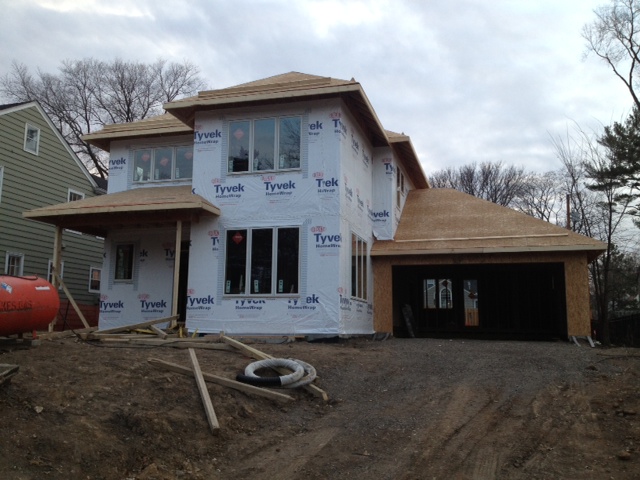
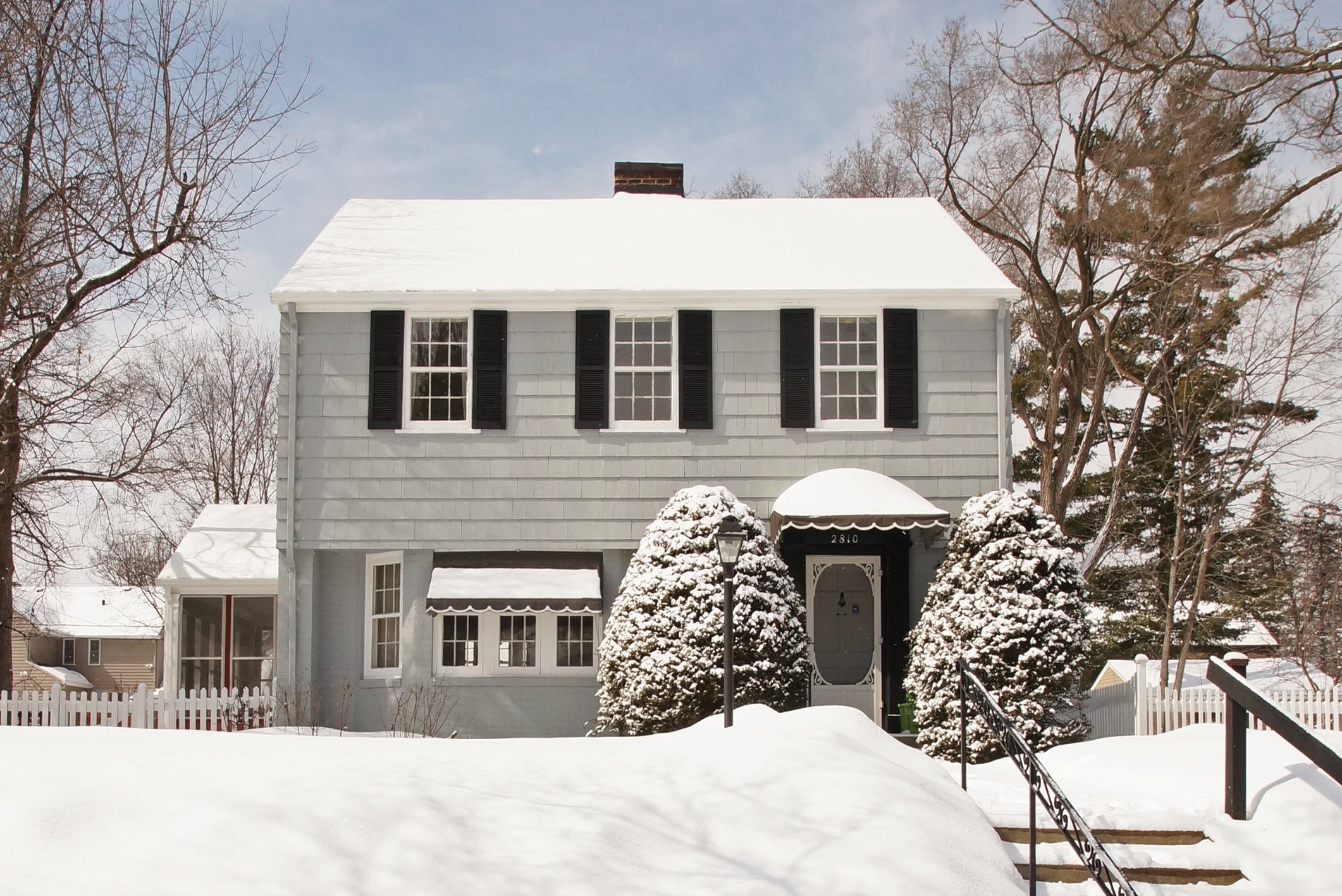
 In the case of a certain Fern Hill tear-down — 2810 Glenhurst, to be specific — step #1 (middle photo, at left) was to remove the old, detached garage, opening up the backyard (full disclosure: I was the listing agent representing the former owner/seller; the top photo was from my marketing last Winter).
Step #2: Grading the hill in front, and designing the new home with a large, attached garage opening to the street (it looks to me like a tandem, two-car — or three stalls total). See, bottom photo.
Step #3, still to come: creating a new curb cut so the owner can access the new garage.
Curb Cut Criteria
The usual city rule regarding curb cuts is, one per legal property ID.
In this case, though, the former owner accessed the garage through a back alley — one they were only able to access thanks to what’s called an “easement appurtenant” (an easement that gives one the right to cross a neighbor’s property to reach one’s own).
Existing number of curb cuts: zero.
Based on that, you’d guess the builder’s application to the city to create a new curb cut is (was?) a slam dunk.
Additional fringe benefit: no more shared shoveling responsibilities with the neighbors regarding the back alley.